Categories
development, new constructionPublished April 17, 2026
Inside Kansas City’s New $120 Million Amphitheater

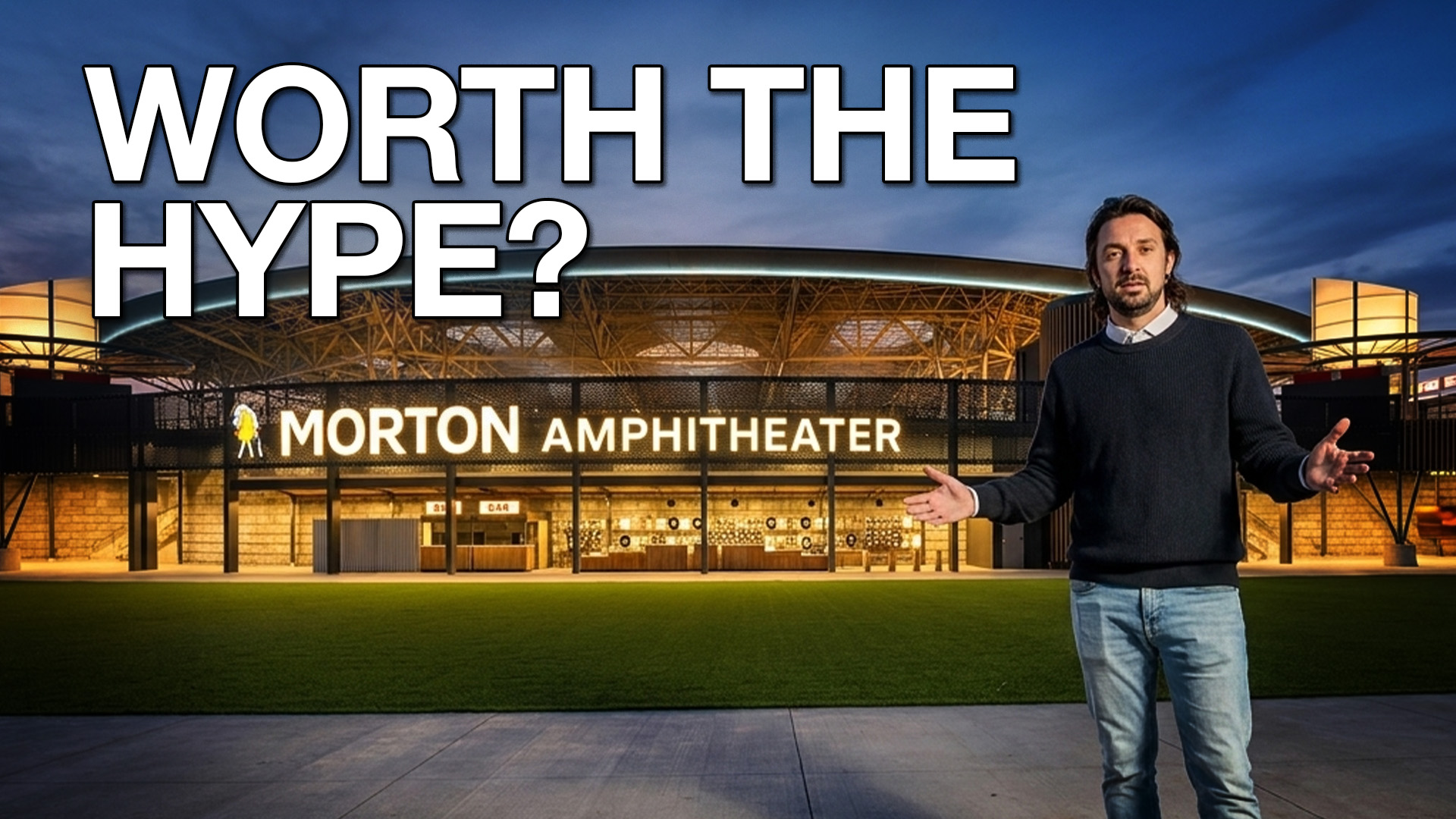
Table of Contents
- A Small Suburb About to Make a Big Splash
- Why Riverside?
- The Entertainment District Taking Shape
- Just How Big Is This Thing?
- The Fan Experience They're Building
- Where Does It Fit in the KC Concert Scene?
- The Economic Case
- You Can Actually Bike Here
- The Big Picture: Live Nation, Years in the Making
- What This Means for Kansas City
1. A Small Suburb About to Make a Big Splash
Just a few minutes north of downtown Kansas City, the small suburb of Riverside, Missouri is about to become the home of one of the largest outdoor concert venues in the Midwest.
The Morton Amphitheater — a 16,000-seat Live Nation venue — is being built right across from the Kansas City Current's training facility, and when it opens, it's expected to bring more than half a million fans to this area every single year.
We got an early look inside to see what they're building and why it could completely reshape this corner of the metro.
3. Why Riverside?
Riverside isn't a large city. That's actually part of what makes this story interesting.
A venue of this size would be notable anywhere in the region — but the fact that it's landing in a smaller suburb, not downtown KC, says something about how development in this metro has started to spread outward and northward in ways that weren't on most people's radar five years ago.
The city of Riverside partnered directly with Live Nation to make this happen. That's not an accident. Riverside has been strategic about its growth, and this amphitheater represents years of groundwork between city leadership and one of the largest live entertainment companies in the world.
For a city of Riverside's size, a venue expected to draw half a million visitors a year isn't just a cool amenity — it's a generational economic development decision.
3. The Entertainment District Taking Shape
Right across the street from the Morton Amphitheater sits the Kansas City Current's training facility — one of the most talked-about sports campuses in the country when it opened.
That's not a coincidence. When you put a world-class soccer training facility and a 16,000-seat concert venue within walking distance of each other, you stop having two separate attractions and start having something more significant: an entertainment district.
This part of Riverside is being positioned as a regional destination. And if the pieces continue to fall into place — retail, restaurants, hospitality infrastructure — it could look very different in ten years than it does today.
4. Just How Big Is This Thing?
To put the scale in perspective: 16,000 seats makes the Morton Amphitheater one of the largest outdoor venues in the Midwest.
Here's how it breaks down:
- 🎶 ~12,000 covered seats — an unusually high covered percentage for a venue this size, which matters a lot for comfort during hot KC summers and unpredictable spring nights
- 🌿 A large general admission lawn behind the covered seating area for a more relaxed experience
- 🏟️ Total capacity of ~16,000 — putting it in range to compete for major touring acts that typically skip mid-size markets
The 12,000 covered seats number is significant. Most outdoor venues leave a much larger percentage of fans exposed to the elements. The decision to cover that much of the seating reflects an intentional bet on fan comfort and repeat attendance.
5. The Fan Experience They're Building
The team behind this venue has been clear that the experience starts before the first note plays.
The vision isn't "show up, watch a concert, leave." It's a full event experience from the moment you arrive — arrival flow, premium options, food and beverage, and the kind of atmosphere that makes you want to come back regardless of who's headlining.
Premium experiences at venues like this typically include:
- 🥂 Club-level seating and hospitality areas
- 🎤 VIP packages with dedicated entry and services
- 🍽️ Curated food and drink options beyond standard concessions
The specifics are still being rolled out, but the philosophy is clear: this is being designed as a destination, not just a venue.
6. Where Does It Fit in the KC Concert Scene?
Kansas City already has established outdoor music venues. Starlight Theatre in Swope Park has been a staple of the local summer concert calendar for decades. Azura Amphitheater in Bonner Springs draws regional crowds on the Kansas side.
So what does the Morton Amphitheater add?
The goal, according to the team behind the project, is to bring in major touring acts that have historically skipped Kansas City — or treated it as a secondary market. At 16,000 seats, this venue can compete for headliners that need the capacity to make the routing numbers work.
That's a gap in the current KC market. Starlight is beloved, but its capacity caps out well below what this venue can hold. Azura sits in a different geography and draws a different crowd.
The Morton Amphitheater isn't trying to replace either of those venues. It's trying to add a tier of touring acts to the Kansas City summer calendar that the metro hasn't consistently had access to before.
7. The Economic Case
The numbers here are worth sitting with:
- 📅 30+ shows expected per season
- 👥 ~500,000 visitors per year
- 💵 Significant multiplier effect on surrounding hotels, restaurants, and retail
Half a million people visiting a single venue in Riverside every year isn't just good for the amphitheater — it's a recurring economic engine for the surrounding area. Every visitor who books a hotel, grabs dinner, shops at a local business, or extends their trip into downtown KC represents economic activity that didn't exist before.
And with Kansas City hosting World Cup matches in 2026, the region is already primed for a surge of inbound visitors and global attention. A major new entertainment venue opening in the same window adds another reason for people to consider KC as a destination worth the trip.
8. You Can Actually Bike Here
Here's a detail that doesn't get enough attention: the Morton Amphitheater connects to the Missouri Riverfront Trail system.
That means for Kansas City residents who live along the trail network, biking to a concert is a realistic option — not a novelty. It's a small thing in the context of a 16,000-seat venue, but it signals something important about how this location was chosen and how the design was thought through.
In a metro that is very much still car-dependent, a major venue with genuine trail access is worth noting. It won't be how most people arrive. But the fact that it's possible at all reflects a different kind of intentionality in the planning.
9. Live Nation, Years in the Making
This project didn't come together overnight.
The city of Riverside and Live Nation have been working toward this for years. That kind of long-timeline, city-private partnership is how major infrastructure projects actually get done — and it's a meaningful endorsement from one of the biggest live entertainment companies in the world that the Kansas City market is worth a venue of this scale and investment.
Live Nation doesn't build 16,000-seat amphitheaters in markets they don't believe in. The fact that Riverside landed one says something about the trajectory they see for this region.
10. What This Means for Kansas City
Whether you're a concert fan or just someone tracking how this metro is growing, the Morton Amphitheater is one of the more interesting developments in the KC area right now.
A world-class training facility. A 16,000-seat concert venue. Trail connectivity to the river. A small city making a very big bet on itself.
Riverside isn't trying to be Kansas City. It's building something that complements the broader metro — and in doing so, it's giving people one more reason to look north of the river.
If you're thinking about making Kansas City home and want to understand how the region is growing, this is exactly the kind of project worth following. Head to movingtokc.net/info to connect with our team — we help people understand not just the neighborhoods, but the momentum behind them.
Kyle Talbot
Owner + Agent + Waldo Mayor + KC Hype Man | Moving to KC | KW Kansas City Metro
or another way