
Categories
development, economy, relocation, world cupPublished November 6, 2026
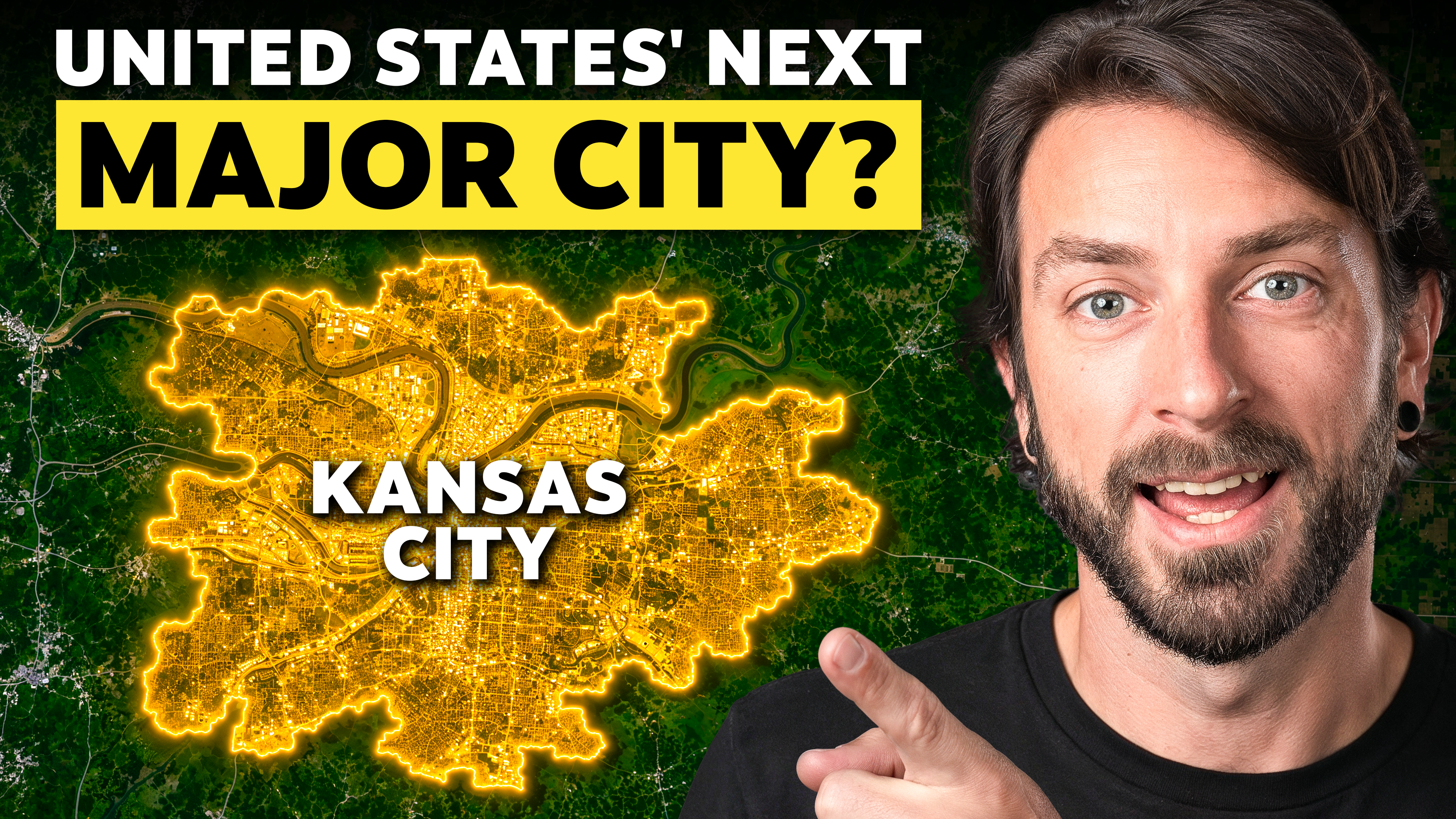
Is Kansas City Actually Becoming a Major City? (2026)

Is Kansas City Actually Becoming a Major City? (2026)
I started thinking about that question during the 2026 World Cup.
Kansas City was, by far, the smallest American host market in a group that included New York, Los Angeles, Miami, Boston, Philadelphia, San Francisco, Seattle, Dallas, Houston and Atlanta. Nobody argues about whether those are major cities. Kansas City feels a little more debatable.
Going into the tournament, a lot of people outside Kansas City probably viewed us as the oddball on the list. Smaller population. Limited public transportation. A stadium nowhere near downtown.
Then the World Cup happened. And instead of looking overwhelmed, Kansas City looked pretty comfortable hosting one of the biggest sporting events in the world.
So was that just a really successful month? Or is Kansas City actually starting to become a major American city?
The Fast Answer: Is Kansas City a Major City?
Not yet. Kansas City is still much smaller than host cities like Dallas, Houston, Atlanta or Seattle, and a good World Cup doesn't put it in the same category as New York or Chicago. But the pieces are coming together: a new airport, an expanding streetcar, more investment in the urban core and a growing city population. The biggest missing pieces are people and jobs, especially more residents living where infrastructure already exists.
I'm Kyle. I'm a local Realtor here in Kansas City, and my team and I work with people moving to, from and around the metro every day. Kansas City is clearly changing. But before we decide whether it's becoming a major city, we have to define what that actually means.
What the World Cup Showed About Kansas City
Here's what Kansas City pulled off in summer 2026:
- 6 matches hosted, with more than 413,000 fans in attendance
- An average of nearly 69,000 fans per match
- The busiest month in KC Streetcar history
- Hundreds of thousands of riders on the temporary regional transit system built for the tournament
- International visitors packing the city
What Makes a City a "Major City"?
Population alone doesn't work. Jacksonville has more people inside its city limits than Boston, and nobody would argue Jacksonville has more national or global influence than Boston.
Geographic size doesn't work either. Kansas City is already huge geographically. That's actually part of the problem.
If I were defining a major city, I'd look at five things:
- Scale. A large enough population and economy to matter regionally and nationally.
- Urban intensity. A dense core with people actually living, working, walking, eating and spending time there.
- Connectivity. An airport, public transportation and infrastructure that can move people efficiently.
- Economic gravity. The ability to attract jobs, talent, companies and investment from outside the region.
- Cultural relevance. Sports, arts, food, events and institutions that make people outside the city pay attention.
By that test, Kansas City is in a really interesting spot. In some categories, we look a lot more like a major city than we did 10 or 15 years ago. In others, we still have a long way to go.
Kansas City Has Been Closer to This Before
The weird part is Kansas City has actually been closer to this before.
In the early 1900s, Kansas City was growing rapidly. Neighborhoods were denser. People lived much closer to the urban core. And we had one of the most extensive streetcar systems in North America. At its peak, the metro had more than 300 miles of streetcar track.
Today, we get excited when the Streetcar adds a couple of miles. Back then, you could move around huge parts of Kansas City without owning a car.
That transportation network shaped the neighborhoods around it: Brookside, Midtown, Westport, Northeast and parts of the East Side. Homes, apartments, small commercial buildings, restaurants and stores were all mixed together along those corridors. Kansas City felt more concentrated.
How Kansas City Grew Out Instead of Up
Then World War II ended, and we changed the entire way we built the city. We built highways. Cars became dominant. Families moved farther out. And Kansas City started annexing enormous amounts of land.
| 1946 | 1964 | Change | |
|---|---|---|---|
| Population | ~434,000 | ~486,000 | About 12% |
| Land area | ~60 sq. miles | 314 sq. miles | More than 400% |
Kansas City did grow. It just grew horizontally, and that decision has shaped almost everything about the city today.
Every time the city expanded, it added infrastructure somebody eventually had to maintain: roads, water lines, sewer lines, streetlights, sidewalks. Everything. And the population never really kept pace with the physical growth of the city.
Why Kansas City's Budget Is Part of This Conversation
That's one of the reasons Kansas City's financial situation matters here. The City went into this budget cycle staring at a projected General Fund deficit of roughly $100 million before reducing that to about $55 million in the proposed budget.
I don't think the solution is just "raise taxes" or "cut services." Kansas City also needs more productive growth: more people, more businesses and more taxable value. Ideally, in places where the infrastructure already exists.
That's the important distinction. If you add another thousand people downtown, you're not building ten miles of new streets to serve them. The roads, water lines, sidewalks and transit are already there. Restaurants and businesses are already nearby. That's a completely different financial equation than adding another thousand people on the outer edge of a 300-square-mile city.
Kansas City Doesn't Need to Become New York
This stood out to me when my family and I were in Portland recently. Portland obviously has its own problems, and I'm not pretending otherwise. But driving through neighborhoods like Hawthorne and some of the closer-in areas, one thing kept jumping out: they felt alive.
People walking. Restaurants. Apartments. Small businesses. Homes. Everything layered together.
It reminded me of what parts of Midtown Kansas City were originally built to be. Not skyscrapers everywhere. Just more people, more activity and more things within walking distance.
That's probably the biggest misunderstanding in this whole "major city" conversation. Kansas City does not need to become New York. Most people here wouldn't want that. But Kansas City probably does need to become a more populated, more productive version of itself.
If you're considering a move, this matters for where you live. Downtown, Midtown, Brookside, Johnson County or 30 minutes out in the suburbs can feel like completely different versions of Kansas City. Our free Kansas City relocation guide breaks down the different areas, neighborhoods and what you need to know before moving here.
The Infrastructure Kansas City Has Already Built
One reason I think Kansas City has a shot at pulling this off is that we've already started investing in the infrastructure to support it.
KCI Airport
For years, KCI was one of those things locals either loved or hated. It was incredibly convenient. You could get dropped off right next to your gate. But it was also outdated, cramped and not exactly the front door you want for a city trying to compete nationally.
The new terminal:
- Opened in 2023 at a cost of $1.5 billion
- The largest single infrastructure project in city history
- 40 gates and more than 1 million square feet
- Modern security, new restaurants and a much better passenger experience
- Ranked fourth among large airports in J.D. Power's latest study
That doesn't make Kansas City a major city. But it removes one of the barriers. If you're trying to attract businesses, conventions, tourists or people considering moving here, the airport matters.
The KC Streetcar
Kansas City ripped out its massive streetcar network decades ago. Then in 2016, we started over with a 2.2-mile line through downtown. Plenty of people thought it was a novelty.
Now the system has expanded south through Midtown to the Plaza and north to Berkley Riverfront. During the World Cup:
- More than 838,000 passenger trips between June 11 and July 11, 2026
- Almost 56,000 riders on July 11 alone, the highest single-day ridership in its history
- About 75% of June trips went to destinations other than the World Cup Fan Festival, including City Market, Power & Light and the Plaza
So yes, the World Cup exaggerated demand. But it also showed what happens when you give people useful transit that connects places they actually want to go.
The Temporary World Cup Transit System
Transportation was one of the biggest concerns going into the tournament, so organizers created a temporary transit system: Stadium Direct, Airport Direct and Regional Direct. More than 215,000 passes were registered across those services.
Kansas City proved it can move a huge number of people without requiring every person to drive their own car to the stadium. The question is whether we learn anything from that now that the event is over.
What Kansas City Still Lacks
A Regional Transit System
Compared with most major cities, transportation is high on the list. We have the Streetcar. We have buses. But we do not have a truly robust regional transit system. You still need a car for most parts of Kansas City, and that limits how dense parts of the metro can realistically become.
People
But transportation isn't the biggest missing piece. People are.
- Kansas City, Missouri had about 508,000 residents in 2020
- The latest Census estimate puts the city around 521,000
- That's about 2.6% growth over five years
That's good. But it's not transformational. And historically, the population of the city itself hasn't grown much relative to how much land we added.
Stadiums don't make you a major city. Neither does a nice airport, a Streetcar or even hosting the World Cup. A major city needs people. People living downtown, in Midtown, along Main Street, in River Market, the Crossroads, the West Bottoms and the East Side. Dense neighborhoods where businesses can survive because enough customers live nearby.
Jobs From Outside the Region
Then you need jobs for those people. For decades, Kansas City has spent an enormous amount of energy fighting itself. Kansas tries to lure companies from Missouri. Missouri tries to lure companies from Kansas. Everybody announces victory.
But if a company moves 10 miles across State Line, the region didn't gain anything. We just moved the same jobs from one tax jurisdiction to another.
The real win is a company that was considering Nashville, Austin, Columbus, Charlotte or Raleigh choosing Kansas City. Or a Kansas City company growing enough to add thousands of new jobs here.
That's economic gravity. Companies want to be there because talent is there. Talent wants to be there because jobs are there. More businesses follow because the population keeps growing. Kansas City has never quite generated that cycle at the scale of Dallas, Atlanta or Nashville, and that might be the biggest test over the next 10 or 20 years.
The Momentum Is Real
There is absolutely momentum:
- The new airport
- The Streetcar expansion
- The KC Current building the first purpose-built stadium for a women's professional sports team
- Major investments happening around downtown
- Continued redevelopment in the Crossroads and River Market
- The West Bottoms finally seeing serious investment
- Millions of people around the world seeing Kansas City during the World Cup in a way they probably never had before
Should Kansas City Even Want to Be a Major City?
Some people hear all of this and ask: why would we want Kansas City to become a major city? That's a fair question, because growth comes with tradeoffs:
- More traffic
- More expensive housing
- Development pressure
- More tourists and more construction
- Neighborhoods changing, and places you love getting busier
Look at Austin. Look at Nashville. Those cities became enormously popular, and a lot of people who lived there before the boom will tell you they lost something along the way.
So I don't think the goal should be "make Kansas City as big as possible." The goal should be to make Kansas City stronger: more people living where we already have infrastructure, more businesses, more housing choices, more walkable neighborhoods, better transit, a stronger tax base, more jobs from outside the region, and enough growth to actually afford to maintain the city we've already built.
Without losing what people like about Kansas City in the first place. The affordability. The neighborhoods. The lack of insane traffic. The ability to buy a house without making $300,000 a year. The fact that you can go to a Chiefs game, have dinner downtown and still live somewhere with a backyard.
That's the balance.
The Bottom Line
So is Kansas City actually becoming a major city? I don't think we're there yet. But Kansas City isn't the same place it was 10 or 15 years ago, and for maybe the first time in a long time, you can see the pieces coming together:
- A world-class airport
- Transit that's expanding instead of disappearing
- More investment in the urban core
- Major sporting events and more national visibility
- A growing city population
- Proof that when the world showed up, Kansas City could handle it
The next part is harder. Can we get more people to stay? Can we attract more companies? Can we build enough housing? Can we make the urban core feel full again? Can we connect more neighborhoods without making everybody get in a car? And can we grow the city's tax base faster than we grow the cost of maintaining it?
If we can, the answer 10 years from now could look very different. Maybe the goal isn't for Kansas City to become the next New York, Dallas or Nashville. Maybe the goal is just to become the best version of Kansas City at a bigger scale.
Frequently Asked Questions
Is Kansas City considered a major city?
Not in the same category as New York, Chicago or even Dallas, Houston, Atlanta or Seattle. Kansas City was the smallest American host market for the 2026 World Cup. But with a new airport, an expanding streetcar and a growing population, it looks more like a major city than it did 10 or 15 years ago.
What is the population of Kansas City, Missouri?
About 521,000, according to the latest Census estimate, up from about 508,000 in 2020. That's roughly 2.6% growth over five years.
How big is Kansas City geographically?
Kansas City, Missouri covers more than 300 square miles. Between 1946 and 1964 alone, the city grew from about 60 square miles to 314 square miles while its population grew only about 12%.
How did Kansas City do hosting the World Cup?
Kansas City hosted six matches with more than 413,000 fans, averaging nearly 69,000 per match. The KC Streetcar had its busiest month ever, with more than 838,000 trips between June 11 and July 11, 2026.
Does Kansas City have good public transportation?
It's improving, but limited. The KC Streetcar now runs from Berkley Riverfront through downtown and Midtown to the Plaza, and there are buses, but there's no robust regional transit system. You still need a car for most parts of Kansas City.
What does Kansas City need to become a major city?
More people and more jobs. Specifically, more residents living in areas where infrastructure already exists, and companies choosing Kansas City over cities like Nashville, Austin or Charlotte rather than moving across State Line.
Thinking About Moving to Kansas City?
If you're thinking about making a move to Kansas City and trying to figure out where you fit into all of this growth, this is what my team and I deal with every day. Reach out at movingtokc.net or email us at info@movingtokc.net.
Watch next: Kyle's video breaking down what Kansas City residents think about the direction the city is heading.
Related reading: What Kansas City Residents REALLY Think About Living Here · Was The World Cup Worth It For Kansas City? · How Kansas City's New Streetcar Is Transforming the City Forever · Answering the Most Common Questions About Living In Kansas City
Source: Figures as referenced by Kyle Talbot in his video script, current as of November 2026.
Kyle Talbot
Owner + Agent + Waldo Mayor + KC Hype Man | Moving to KC | KW Kansas City Metro
or another way