
Categories
world cup, events, economyPublished August 21, 2026
Was The World Cup Worth It For Kansas City?

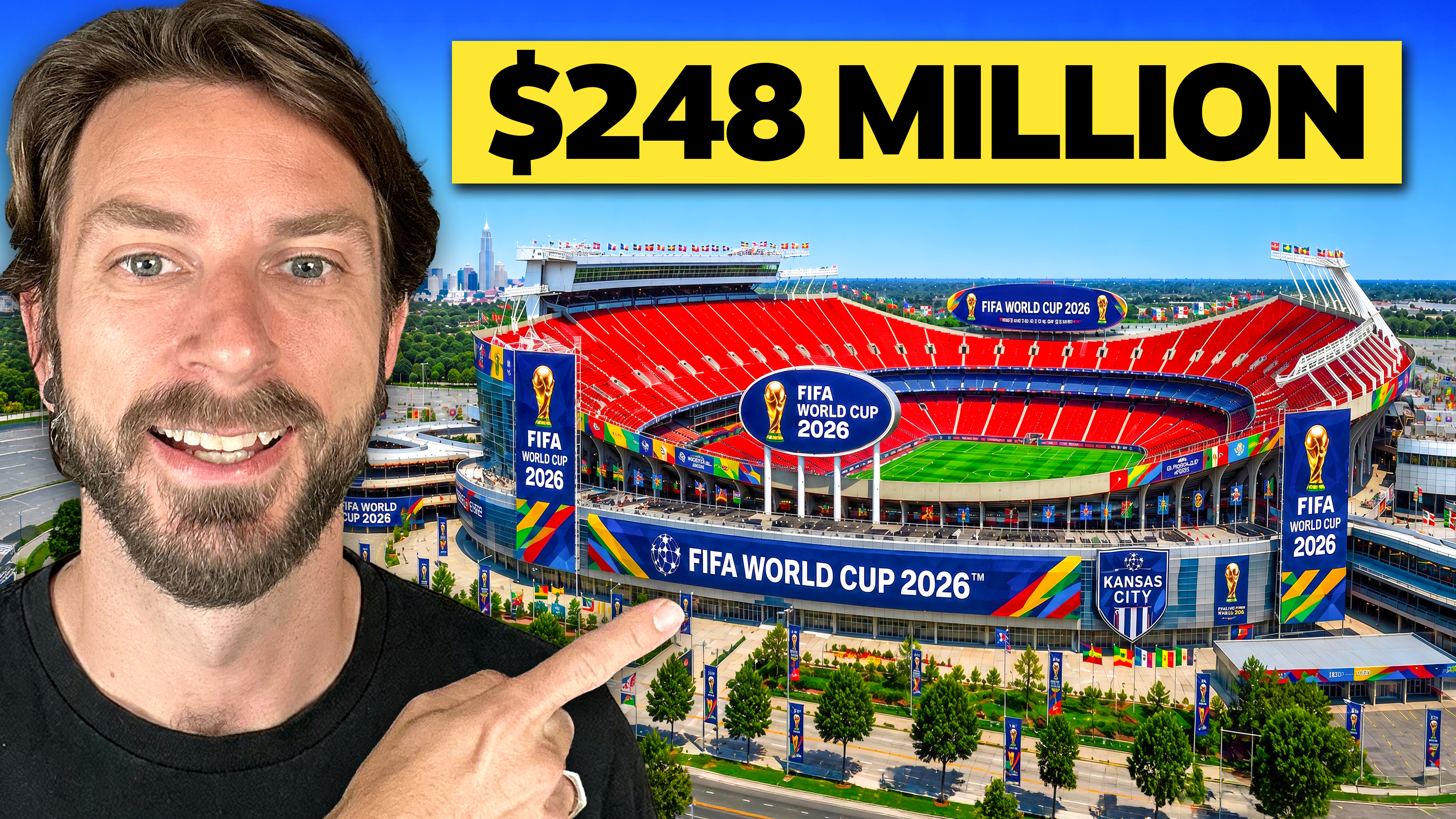
Was the World Cup Worth It for Kansas City? What the 2026 Numbers Actually Show
For one month, Kansas City felt like the center of the world.
Messi scored his first World Cup hat trick at Arrowhead. More than 36,000 Dutch fans in orange marched through downtown. Fan Fest was packed. The streetcar shattered every ridership record it had ever set. And Kansas City International recorded the busiest outbound travel day in its history.
Then the receipts started coming in — and nearly six in ten restaurant and hospitality operators in one post-tournament survey described the World Cup's impact on their business as negative.
So which version is true?
Fast Answer: Was Hosting the World Cup Worth It for Kansas City?
Both things are true at once. Kansas City hosted 413,169 match admissions across six matches and 400,000+ Fan Fest visits, set all-time records for streetcar ridership, airport traffic, and Kansas City, Kansas hotel revenue — and did it on roughly $248 million in public money across federal, state, and local sources. But the economic benefit was heavily concentrated. A Missouri Restaurant Association survey of 39 operators representing 116 metro locations found 59% called the impact negative and 51% reported lower revenue. As of August 2026 there is still no comprehensive independent accounting of visitor counts, spending, or tax revenue. The strongest case for "worth it" isn't one month of tourism dollars — it's the credibility Kansas City now has to compete for the next decade of major events. Whether that pays off depends entirely on what the region does next.
I'm Kyle, a licensed realtor in Kansas City and the team lead at Moving to KC. I spend a lot of time covering how this city is growing, changing, and positioning itself — and I went to the matches, the fan marches, and the business panels myself. This is the honest version, not the victory lap.
What Kansas City Was Promised: 650,000 Visitors and $653 Million
Before the tournament, Kansas City was told to prepare for roughly 650,000 visitors and an estimated $653 million in regional economic activity. That number was everywhere.
Restaurants added staff. Businesses ordered extra inventory. Hotels adjusted rates. Homeowners listed properties on Airbnb. Cities across the metro spent money on transportation, security, and infrastructure.
But there's a distinction that got lost along the way.
That $653 million was a projection, produced by Visit KC using an industry-standard tool for destination marketing organizations. It assumed six matches, an average hotel rate around $299 a night, and that roughly 80% of attendees would arrive by air. The 650,000 figure came from a projection of 2.1 million "visitor days" — one person spending a day and night in the city, counting repeats — and included both ticketed fans and people coming for watch parties and Fan Fest (KCUR).
It was never a promise that tourists would personally hand $653 million to Kansas City restaurants and hotels. Economic-impact estimates can include event operations, employee wages, infrastructure spending, business-to-business transactions, and money that keeps circulating afterward. Economists routinely caution that these projections run high because they don't account for displaced spending or for locals who avoid the crowds.
And here's the part worth sitting with: as of this writing in August 2026, there is still no single comprehensive independent report telling us how many unique visitors came, how much they spent, how much tax revenue was generated, or whether Kansas City reached that projection. KC2026 CEO Pam Kramer said in late July that early credit card data showed spending was up, but that "the official economic numbers are not out yet".
There was significant economic activity. It just wasn't distributed evenly. That distinction is the whole story.
The Businesses That Never Saw the Crowds
The clearest data point we have so far came from the Missouri Restaurant Association, which surveyed 39 restaurant and hospitality businesses representing 116 locations across the metro.
The results are hard to spin:
- 59.0% rated the World Cup's impact on their business as negative
- 51.3% reported an overall decline in revenue
- 30.8% reported revenue down more than 10%
- 51.3% saw decreased customer traffic
- 71.8% estimated they generated less than $5,000 in additional World Cup-related revenue
- Of the businesses that extended their hours, 81.8% said those extra hours produced little or no meaningful benefit
These weren't operators who ignored the tournament. Many had spent months preparing for exactly the surge they'd been told was coming. They staffed up, ordered inventory, and stayed open later.
This was not every restaurant in Kansas City. Plenty of businesses had the month of their lives. Fan Fest was packed. Power & Light was packed. Union Station saw enormous traffic. Official vendors, transportation providers, and Kansas City's best-known barbecue destinations captured a lot of visitor spending.
But that's exactly the point: the impact was concentrated.
Most international fans weren't touring Kansas City the way a typical visitor would. They were following their national team. Their trip revolved around matches, fan events, and wherever supporters from their country were gathering. They weren't landing at KCI asking which independent restaurant 20 minutes away they should try.
Meanwhile, a lot of Kansas Citians changed their own behavior. After months of warnings about traffic, road closures, and crowds, some people worked from home, some avoided downtown, and some just stayed away.
So businesses in certain areas lost their regular local customers without picking up enough international visitors to replace them. The World Cup made the pie bigger. Depending on where your business sat, you may never have gotten a slice.
Where the Money Actually Showed Up
Hotels
On July 11 — the Argentina vs. Switzerland quarterfinal — hotels in Kansas City, Kansas generated $560,577 in revenue at an average daily rate of $270.68. That was the single largest hotel-revenue day in the city's history. Five of the top 10 and nine of the top 20 highest hotel-revenue days ever recorded in KCK happened during the tournament, with occupancy on major event days ranging from 84.1% to 95.8% (Visit Kansas City, Kansas).
Even there, it wasn't a month of printing money. The biggest matches produced huge spikes; advance demand in between was softer than expected, and short-term rentals absorbed part of the lodging demand.
The Airport
Kansas City International handled 1,127,270 passengers in June, up 2.19% over June 2025. Then on July 12, the morning after the quarterfinal, 24,266 passengers cleared security — the busiest outbound travel day in the airport's 54-year history. Eight separate days topped 20,000 outbound travelers during the tournament (Axios KC).
That number deserves a pause, because I don't think it happens without the new terminal.
The new KCI wasn't just a nicer building for locals to fly out of. It was one of the foundational investments that made Kansas City capable of hosting at this scale. I don't believe the old airport handles this tournament the same way — and I'm not convinced Kansas City wins the bid at all without it. (That's my read, not a documented finding — needs Kyle review before publish.)
The Transit Experiment — and What Happened After
Getting people here was half the challenge. Moving them around a metro built for cars was the other half. This is where Kansas City surprised me most.
Between June 11 and July 11, the KC Streetcar carried 838,826 passenger trips. June alone set an all-time monthly record at 698,705 riders — more than four times June 2025. On July 11, a single-day record 55,973 people rode it. The five busiest days in streetcar history all happened during the tournament (KC Streetcar).
The most interesting number, though: approximately 75% of June streetcar trips went to destinations other than Fan Fest.
People weren't just shuttling to one event. They were moving between the River Market, downtown, the Crossroads, Midtown, the Plaza, and UMKC. For a few weeks, the streetcar became the spine of how visitors experienced Kansas City.
Buses carried real weight too. Streetcar Link buses added more than 100,000 trips along Main Street. Route 201 ridership jumped roughly 76%. Routes 12, 31, 47, and 63 each climbed by a third or more. And KC2026's ConnectKC26 network distributed more than 215,000 passes, including nearly 145,000 for Stadium Direct.
Transportation was not perfect. I experienced that firsthand — after my first match, my advice to anyone going to another one was to arrive at least three hours early. Moving tens of thousands of people into Arrowhead was always going to be hard. There were long waits, confusion, frustration.
But the transportation disaster a lot of people predicted never happened.
Here's the frustrating part. The expanded service was always temporary. KCATA had planned to eliminate 9 bus routes and cut frequency on 4 more starting September 6 — roughly a quarter of daily service — as World Cup funding ran out. On August 17, 2026, the Kansas City Council unanimously approved $8.3 million in emergency funding to stop those cuts, extending service through April 2027 (KCUR). That's the fourth last-minute rescue since 2025.
So for one month, we showed people what a more connected Kansas City could look like. Then we went right back to funding it eight months at a time. That may be the most important lesson this tournament produced — and it has almost nothing to do with soccer.
What It Actually Felt Like
Kansas City recorded 413,169 match admissions across six games (averaging 68,862 per match), and Fan Fest logged more than 400,000 visits over 19 days, supported by 3,400 volunteers with a 90% show rate (KC2026).
Numbers don't explain what those weeks felt like.
I took my wife and my 10-year-old son to Argentina vs. Algeria at Arrowhead on June 16. As Chiefs fans, we're used to walking into that stadium and seeing red everywhere. That night, almost everyone around us wore Argentina's blue and white stripes or a Messi No. 10. Then Messi scored three goals — his first World Cup hat trick, in a 3-0 Argentina win. My son will remember that night for the rest of his life.
We also joined the Oranje Fanwalk on June 25, when roughly 36,000 Netherlands supporters in orange — the largest Dutch fan march in the United States that tournament — sang and danced through downtown streets that had never seen anything like it.
Standing there, it felt less like Kansas City was hosting a sporting event and more like the city had been temporarily dropped into another culture.
That's part of why I don't think you measure the World Cup through restaurant receipts alone. Something else happened here. Kansas City changed the way people looked at it — and maybe the way it looks at itself.
"Little Old Kansas City": The Credibility We Actually Bought
During the tournament I attended a panel at KC House — KC2026's invitation-only hospitality and business hub at 111 Nichols Road on the Country Club Plaza — with Clark Hunt, Cliff Illig, Pam Kramer, and FIFA representatives.
One comment from Cliff Illig stuck with me. He said that when Kansas City first won the World Cup bid, other Major League Soccer owners called him because they couldn't believe "little old Kansas City" had done what was necessary to secure it. (Quote is from my notes at a private panel and isn't independently published — needs Kyle review before publish.)
That phrase says a lot. Kansas City has always been viewed as a great sports town, a good place to raise a family, a city people like once they visit. It has not historically been viewed as a city that competes for the biggest international events on the planet.
Before the World Cup, the question was: how did little old Kansas City pull this off?
After the World Cup, that's not the question anymore. Now it's: what does Kansas City host next?
That might be the most valuable thing we bought. Credibility.
The Part That Could Last for Decades
KC House existed to put business leaders, elected officials, civic partners, and international visitors in the same room, using the World Cup as the reason those conversations started — and hoping they'd continue after everyone flew home.
Lawrence is the clearest early example of what that can look like.
Algeria selected Rock Chalk Park and the University of Kansas as its base camp. KU Athletics expected to break even at best — deputy AD Jason Booker put it bluntly: "This is not a major money-maker for KU by any means."
What they got instead is harder to price:
- Roughly 400 Lawrence residents turned out to welcome the team, and 2,500 people attended an open community training session at Rock Chalk Park (FIFA)
- KU's Instagram post welcoming Algeria drew 44,600 likes; a video of Riyad Mahrez's goal drew 101,000 — the most-viewed social content in the athletic department's history
- KU is now exploring how to recruit students from Algeria and North Africa (KCUR)
- Sister Cities of Lawrence is considering a formal partnership with Biskra, Algeria (The Lawrence Times)
None of that is guaranteed to become something significant, and it's important not to pretend it already has. But it shows how a month-long sporting event can create relationships that outlast the tournament by years.
One Metro, For Once
There's another impact I think is being underappreciated.
This was never just a Kansas City, Missouri event. The footprint stretched through Kansas City, Kansas; Johnson County; Lawrence; the Northland; and communities across the region. For the World Cup to work, a sprawling two-state metro had to operate like one region.
That sounds obvious until you actually live here. Kansas City spends a lot of time acting like a collection of separate cities — different municipalities, different counties, two states, different transit systems, different economic-development agencies, different priorities.
For a few weeks, the world forced all of us to act like one Kansas City. If any of that cooperation survives the tournament, it may be one of its most underrated legacies.
Follow the Money: What Kansas City Still Deserves to Know
Here's where the criticism is completely fair. Civic pride is hard to quantify. International relationships are hard to quantify. The public investment is not.
According to KSHB's accounting, public spending connected to the tournament totaled roughly $248 million:
- Federal — about $79.4 million: $59M through the FIFA host-city grant program, $14.2M for counter-drone efforts, $6.1M for public safety and transportation projects
- State of Missouri — $125 million: roughly $50M for renovations at GEHA Field at Arrowhead; the remainder set aside for public safety (reimbursement-based, so not all of it is necessarily spent)
- State of Kansas — $28 million: largely American Rescue Plan Act funds, including about $10M for infrastructure at Sporting KC's stadium
- City of Kansas City, Missouri — $15 million: directed to KC2026 for Fan Festival operations and shuttle service to the stadium, airport, and Fan Fest
Not all of that disappeared into a temporary party. Real money went to transportation, security, and infrastructure that outlives the tournament.
But when taxpayers invest at that scale, the standard can't be "we didn't embarrass ourselves and everyone had fun." Kansas City deserves a transparent final accounting:
- How many people actually visited?
- How much did they spend?
- How much tax revenue came back?
- Which infrastructure investments remain?
- What happened to the businesses that prepared for crowds that never reached them?
- What are we doing with the relationships and credibility we just paid for?
Residents did their part. Local businesses did their part. Cities across the region did their part. Now the organizations that promoted this tournament have to show the investment created something durable.
What Comes Next: 2031 and Beyond
Kansas City is already looking ahead. On August 11, 2026, a city council committee advanced proposals authorizing the city manager to bid on both the 2031 FIFA Women's World Cup and the 2031 Men's Rugby World Cup, with budget allocations beginning in 2028 (KCTV5).
The competition is real: Kansas City is one of 14 U.S. cities bidding for Women's World Cup matches and one of 27 for the rugby tournament. The full council still has to approve.
But the pitch is fundamentally different this time. Kansas City wouldn't be selling organizers on what it believes it can do. It would be showing them what it already did.
And the opportunity extends well past soccer: international conventions, women's sports, cultural events, youth tournaments, esports, major entertainment. Kansas City still doesn't have the kind of nationally defining destination music festival people associate with Austin, Chicago, or Nashville — and after watching this city move hundreds of thousands of international fans through the region, it's harder to argue we're not capable of supporting events at that scale.
The World Cup opened a door. The question is whether we walk through it.
So, Was the World Cup Worth It for Kansas City?
If the only measure is whether every restaurant made more money — no. The economic benefits were real but uneven. Too many businesses prepared for crowds that never reached them. And we still need a legitimate final accounting of where the public money went and what came back.
If the question is whether Kansas City proved it can welcome the world, move enormous crowds, host national teams, run one of the largest sporting events on the planet, and give international organizations confidence it can do it again — absolutely.
Which is where I land: I don't think Kansas City has proven the World Cup was worth every dollar. I think Kansas City earned the opportunity to make it worth it.
The tournament itself may not be the return on investment. The return is what we can now do because we hosted it.
If the international relationships fade, the transit lessons get forgotten, the business connections go nowhere, and the next major events pick other cities — then this was an unforgettable month and a very expensive party.
But if Kansas City converts that credibility into new events, investment, students, companies, and infrastructure that wouldn't have existed otherwise, 2026 gets remembered as something much bigger.
For years, our challenge was convincing the world we belonged on this stage. We did that. Now the ball is in our court.
Frequently Asked Questions
How much did Kansas City spend on the 2026 World Cup?
Public spending connected to the tournament totaled roughly $248 million: about $79.4 million in federal funds, $125 million from the State of Missouri (including ~$50 million for Arrowhead renovations), $28 million from the State of Kansas, and $15 million from the City of Kansas City, Missouri. Missouri's share was a set-aside, so the final spend may come in lower.
Did Kansas City hit its $653 million economic impact projection?
Unknown. As of August 2026, no comprehensive independent report has been released on visitor counts, spending, or tax revenue. The $653 million figure was a pre-tournament projection by Visit KC using a standard destination-marketing model — not a measured result. KC2026 has said early credit card data showed spending was up, but official numbers aren't out.
How many people attended the World Cup in Kansas City?
Kansas City recorded 413,169 match admissions across six matches at Arrowhead — an average of 68,862 per match — plus more than 400,000 visits to the FIFA Fan Festival over 19 days.
Did Kansas City restaurants make money during the World Cup?
Many didn't. In a Missouri Restaurant Association survey of 39 businesses representing 116 metro locations, 59% called the impact negative, 51.3% reported lower revenue, and 30.8% saw revenue drop more than 10%. Businesses inside the official event footprint — Fan Fest, Power & Light, Union Station — generally did much better than those outside it.
Did the World Cup improve public transit in Kansas City?
Temporarily. The KC Streetcar set all-time records (838,826 trips between June 11 and July 11, including a single-day record of 55,973 on July 11), and expanded bus service carried significant additional ridership. But that expanded service was funded for the tournament. KCATA had planned to cut roughly a quarter of daily service in September 2026 before the city approved $8.3 million in emergency funding on August 17, extending service through April 2027.
Is Kansas City hosting the World Cup again?
Kansas City is pursuing matches in the 2031 FIFA Women's World Cup and the 2031 Men's Rugby World Cup. A city council committee advanced bid authorization on August 11, 2026, with funding allocations starting in 2028. Kansas City is one of 14 U.S. cities bidding for the Women's World Cup and one of 27 for rugby.
Thinking About Moving to Kansas City?
If the World Cup introduced you to Kansas City for the first time and you're wondering what it's actually like to live here — the neighborhoods, the price points, the school districts, the commute — that's the conversation my team has every week.
Reach out at movingtokc.net/info or email info@movingtokc.net. The free relocation guide breaks down every major suburb and price point in one place.
Want to hear it from the visitors themselves? Watch this one next — I asked World Cup fans what they really thought of Kansas City. (No live URL yet — needs the published video link before publish.)
Related reading: Everything New & Coming Soon to Kansas City in 2026 · How Kansas City's New Streetcar Is Transforming the City Forever · Kansas City Areas Nobody Is Talking About · What Realtors Don't Tell You About Living in Kansas City. (Related-reading links are placeholders — needs live published URLs before publish.)
Sources: Missouri Restaurant Association World Cup Economic Impact Report · KC Streetcar World Cup Recap · Axios KC — World Cup transit records · Visit Kansas City, Kansas — record hotel revenue days · KSHB — how much of your tax dollars paid for the World Cup · KCUR — 650,000 visitor projection · KCTV5 — 653 million projection · KCTV5 — mixed business returns · KC2026 attendance figures · KCUR — KCATA emergency funding · KCTV5 — 2031 bid funding · The Lawrence Times — KU break-even · The Lawrence Times — Biskra sister city · KCUR — KU international students · FIFA — Algeria and Lawrence · Yahoo Sports — Oranje Fanwalk · FIFA — Messi hat-trick · KSHB — KC House Global Gateway
Kyle Talbot
Owner + Agent + Waldo Mayor + KC Hype Man | Moving to KC | KW Kansas City Metro
or another way